Dental prosthodontics is a field that deals with restoring the function and aesthetics of teeth through the use of various prosthetic solutions. It is a key discipline in restoring patients' full bite function, improving speech and restoring self-confidence through an aesthetically pleasing smile.
Prosthodontics allows us to rebuild a single missing tooth as well as the entire dentition. Thanks to the wide range of our technical laboratory, we are able to offer many solutions, and new laboratory technologies like CAD/CAM ensure perfect and precise work.
Prosthetic treatment includes:
Dental prosthodontics services include a wide range of activities aimed at restoring the function and aesthetics of the teeth.
A veneer is a micro-invasive highly aesthetic solution. Preparation in this case is minimal however, this restoration requires most of the current healthy tooth tissue.
As a rule, we use veneers on teeth in the smile (aesthetic) zone. They cover only the front surfaces of the tooth.
Veneers can be porcelain and composite. Both have their advantages and disadvantages. However, the most aesthetic works are those made of porcelain. Both types of veneers are cemented works and require at least two visits at intervals.
Don't forget about bonding, or veneers made in the office from composite. This is a much cheaper solution, but not as aesthetically pleasing as porcelain or laboratory composite. They are made in one visit after a prior consultation.
Crowns and bridges are made of the same material:
Crowns and bridges require grinding of tooth tissue on all surfaces. Sometimes, also root canal treatment, such as in the case of deep fillings. After preparation, impressions are taken, which are sent to a technical laboratory for fabrication of the work. The ground teeth are secured with temporary crowns. The crowns/bridges, once the color and conditions are approved, are cemented onto the pillars (ground teeth).
Crowns are used when a tooth undergoes major destruction, while bridges fill in missing teeth by splinting them together.
This is nothing more than composite veneer performed in the office. Of course, before the procedure, a consultation is necessary to detect carious cavities in the front teeth. During the first visit, we also analyze the bite conditions that the patient has.
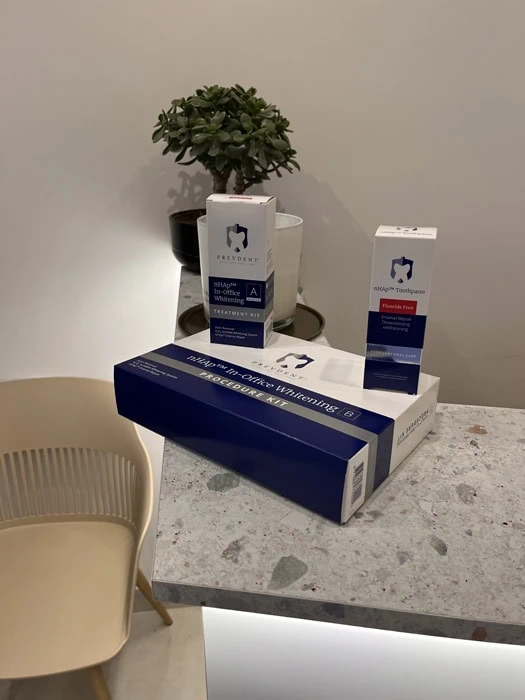
Bonding is the covering of the front surface of the tooth with a highly aesthetic composite, which we use primarily to improve the shape and color of the tooth. Sometimes teeth whitening is recommended before the procedure to remove color disproportion that may appear after bonding. Our whitening system Prevdent guarantees a long-lasting effect of white teeth, and at the same time does not damage in any way the structure of teeth and does not cause sensitivity. Bonding makes it possible to achieve an aesthetically pleasing smile in a short time and at a low cost. The process is usually performed in one visit and is completely painless. Sometimes the tooth requires micro-invasive preparation, during which up to 0.5mm of enamel is eliminated just before the material is applied.
In the end, we can restore the desired shape of the teeth as well as additionally make them whiter. Please note that composite veneers require polishing at least twice a year.
Complete absence of teeth - In this case, we have a choice of acrylic or flexible dentures. Making both of them involves several visits and a period of about 2-3 weeks. For a flexible denture, the patient is able to adjust in a shorter period of time. However, if the restoration is damaged, it is virtually impossible to repair the denture. The situation is different with an acrylic denture, the repair of which is much easier.
With complete edentulousness, implant-supported dentures can be used. In this case, we need a minimum of four implants in the jaw and/or two implants in the mandible. This is a much more stable solution than dentures without implants.
Partial missing teeth - Here we have a choice of skeletal dentures with metal elements or a more aesthetic form like dentures on clasps. However, the latter type of restoration requires additional prosthetic work in the form of crowns. Making a denture on clasps involves longer treatment and a higher final cost.
For residual teeth, overdentures are possible. These are designed to hold even root canal-treated teeth, which will provide support for the new denture.
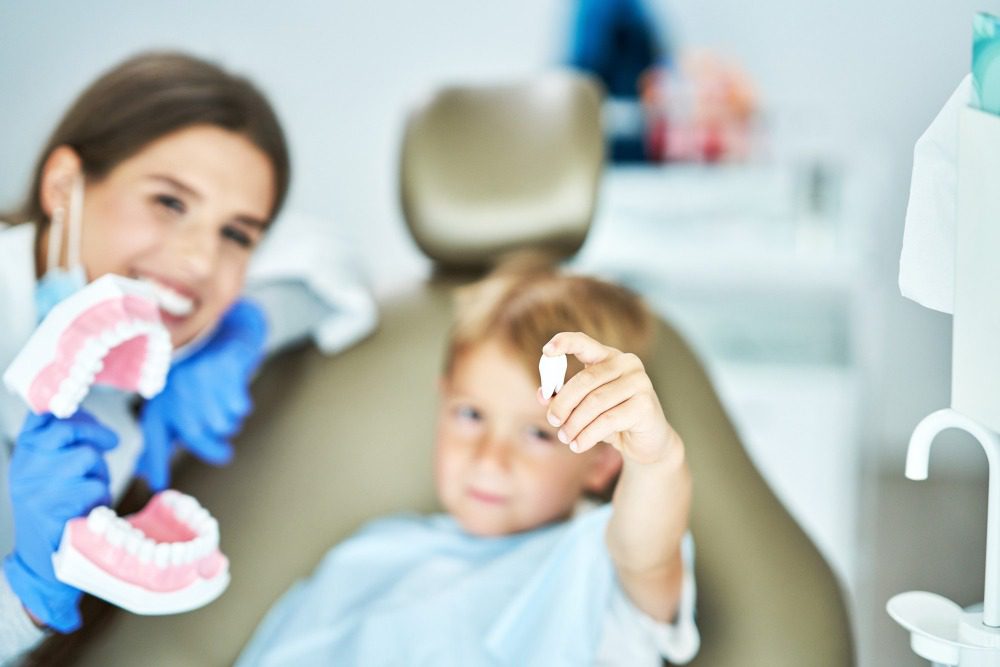
Dental prosthodontics services include a wide range of activities aimed at restoring the function and aesthetics of the teeth.
Crowns and bridges are made of the same material:
Crowns and bridges require grinding of tooth tissue on all surfaces. Sometimes, also root canal treatment, such as in the case of deep fillings. After preparation, impressions are taken, which are sent to a technical laboratory for fabrication of the work. The ground teeth are secured with temporary crowns. The crowns/bridges, once the color and conditions are approved, are cemented onto the pillars (ground teeth).
Crowns are used when a tooth undergoes major destruction, while bridges fill in missing teeth by splinting them together.
A veneer is a micro-invasive highly aesthetic solution. Preparation in this case is minimal however, this restoration requires most of the current healthy tooth tissue.
As a rule, we use veneers on teeth in the smile (aesthetic) zone. They cover only the front surfaces of the tooth.
Veneers can be porcelain and composite. Both have their advantages and disadvantages. However, the most aesthetic works are those made of porcelain. Both types of veneers are cemented works and require at least two visits at intervals.
Don't forget about bonding, or veneers made in the office from composite. This is a much cheaper solution, but not as aesthetically pleasing as porcelain or laboratory composite. They are made in one visit after a prior consultation.
Complete absence of teeth - In this case, we have a choice of acrylic or flexible dentures. Making both of them involves several visits and a period of about 2-3 weeks. For a flexible denture, the patient is able to adjust in a shorter period of time. However, if the restoration is damaged, it is virtually impossible to repair the denture. The situation is different with an acrylic denture, the repair of which is much easier.
With complete edentulousness, implant-supported dentures can be used. In this case, we need a minimum of four implants in the jaw and/or two implants in the mandible. This is a much more stable solution than dentures without implants.
Partial missing teeth - Here we have a choice of skeletal dentures with metal elements or a more aesthetic form like dentures on clasps. However, the latter type of restoration requires additional prosthetic work in the form of crowns. Making a denture on clasps involves longer treatment and a higher final cost.
For residual teeth, overdentures are possible. These are designed to hold even root canal-treated teeth, which will provide support for the new denture.
This is nothing more than composite veneer performed in the office. Of course, before the procedure, a consultation is necessary to detect carious cavities in the front teeth. During the first visit, we also analyze the bite conditions that the patient has.
Bonding is the covering of the front surface of the tooth with a highly aesthetic composite, which we use primarily to improve the shape and color of the tooth. Sometimes teeth whitening is recommended before the procedure to remove color disproportion that may appear after bonding. Our whitening system Prevdent guarantees a long-lasting effect of white teeth, and at the same time does not damage in any way the structure of teeth and does not cause sensitivity. Bonding makes it possible to achieve an aesthetically pleasing smile in a short time and at a low cost. The process is usually performed in one visit and is completely painless. Sometimes the tooth requires micro-invasive preparation, during which up to 0.5mm of enamel is eliminated just before the material is applied.
In the end, we can restore the desired shape of the teeth as well as additionally make them whiter. Please note that composite veneers require polishing at least twice a year.