Diagnostics

Diagnostics

Diagnostics

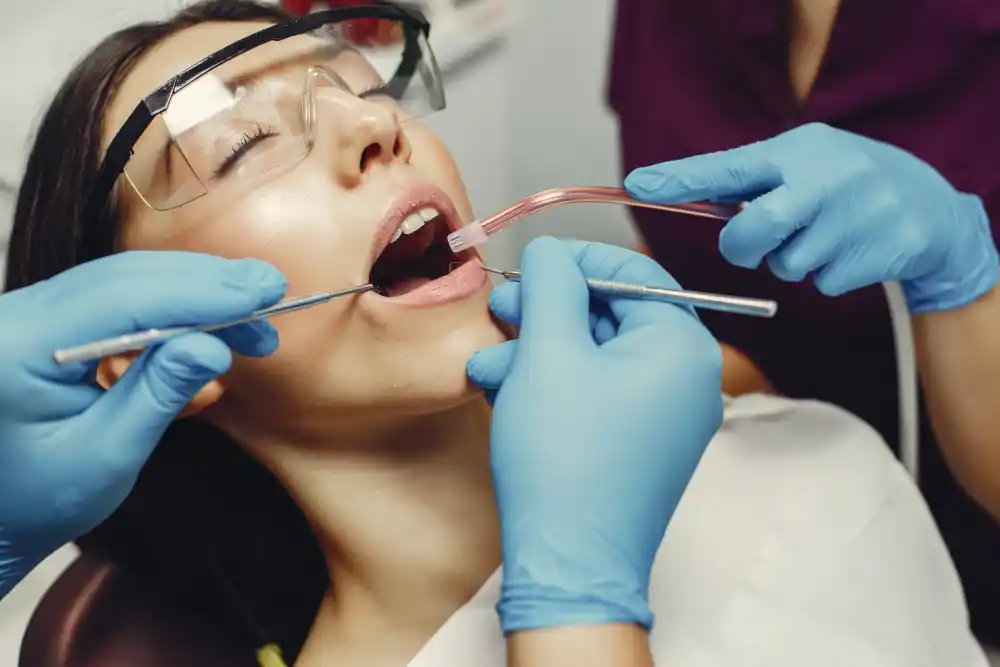
Dental diagnosis is a fundamental step in assessing the health of the mouth and teeth to determine the best treatment plan for the patient. The dentist uses a variety of tools and techniques, such as clinical examination, X-rays and sometimes 3D CT scans, to accurately assess the condition of teeth, gums and bone structures. Early diagnosis helps detect health problems such as tooth decay, gum disease or infections before they become more serious or painful, and responds quickly enough when needed.

Healthy prevention - various methods of dental diagnostics

Accurate diagnosis is key and the basis for proper treatment. At our office, we offer patients several options, of which computed tomography (CBCT) is far superior to other diagnostic methods.

Pantomogram

It is a standard image that includes both maxillary and mandibular teeth. It is now being decisively supplanted by CT scans.

A panoramic radiograph (panorama) is a one-dimensional image, so its accuracy is incomparably less than the aforementioned tomography. Panorama can be performed as a diagnosis of third molars (eights) with an unattached position. For teeth with hard-to-reach locations, 3D examination is recommended.

Computed tomography


Performing a CT scan is already practically standard procedure when planning long-term treatment. As a rule, we perform a 3D scan at the first specialist consultation, so we are able to find lesions/abnormalities invisible to ordinary radiography.

In our office, we have state-of-the-art equipment in the form of a CS 8100 SC 3D CT scanner. It gives you the ability to take pantomographic images, as well as the aforementioned 3D tomography.

Pantomography:

  • A wide spectrum of OPG examinations: fragmentary radiographs, temporomandibular joint projections, sinus and pterygopalatal radiographs
  • the only pantomograph on the market with the function of parallel layered scans allowing to determine the position of supernumerary and retained teeth and to determine the relationship of the root and the alveolar process

3D CBCT Tomography:

  • highest resolution
  • Extremely short 3D examination time
  • Navigation-friendly, yet specialized 3D software that allows, for example, the planning of implant procedures with an extensive implant database

Wing-bite photos

These are basic images used to verify caries at the tangent points of teeth. Taking them is essential during the first diagnostic visit, because very often we are not able to clinically catch changes below the tangent point of teeth or small cavities. Wing-bite radiographs enable us to make this verification, which is why taking them is so important.

Targeted (periapical) radiographs

These are the basic images used to verify one or two teeth. They include all the structures of the tooth. However, they are one-dimensional images, which is why, for example, during a specialist consultation, clipping or targeted tomography is more recommended.

We have RVG equipment at each of our units, with which we can take a point-of-care photo at any time, which we will use to immediately verify the condition of the tooth. RVG equipment generates much less radiation than standard X-ray machines, so even taking several RVG images at one time is safe.
Healthy prevention - various methods of dental diagnostics

Accurate diagnosis is key and the basis for proper treatment. At our office, we offer patients several options, of which computed tomography (CBCT) is far superior to other diagnostic methods.

Computed tomography

Performing a CT scan is already practically standard procedure when planning long-term treatment. As a rule, we perform a 3D scan at the first specialist consultation, so we are able to find lesions/abnormalities invisible to ordinary radiography.

In our office, we have state-of-the-art equipment in the form of a CS 8100 SC 3D CT scanner. It gives you the ability to take pantomographic images, as well as the aforementioned 3D tomography.

Pantomography:

  • A wide spectrum of OPG examinations: fragmentary radiographs, temporomandibular joint projections, sinus and pterygopalatal radiographs
  • the only pantomograph on the market with the function of parallel layered scans allowing to determine the position of supernumerary and retained teeth and to determine the relationship of the root and the alveolar process

3D CBCT Tomography:

  • highest resolution
  • Extremely short 3D examination time
  • Navigation-friendly, yet specialized 3D software that allows, for example, the planning of implant procedures with an extensive implant database

Pantomogram

It is a standard image that includes both maxillary and mandibular teeth. It is now being decisively supplanted by CT scans.

A panoramic radiograph (panorama) is a one-dimensional image, so its accuracy is incomparably less than the aforementioned tomography. Panorama can be performed as a diagnosis of third molars (eights) with an unattached position. For teeth with hard-to-reach locations, 3D examination is recommended.

Targeted (periapical) radiographs

These are the basic images used to verify one or two teeth. They include all the structures of the tooth. However, they are one-dimensional images, which is why, for example, during a specialist consultation, clipping or targeted tomography is more recommended.

We have RVG equipment at each of our units, with which we can take a point-of-care photo at any time, which we will use to immediately verify the condition of the tooth. RVG equipment generates much less radiation than standard X-ray machines, so even taking several RVG images at one time is safe.

Wing-bite photos

These are basic images used to verify caries at the tangent points of teeth. Taking them is essential during the first diagnostic visit, because very often we are not able to clinically catch changes below the tangent point of teeth or small cavities. Wing-bite radiographs enable us to make this verification, which is why taking them is so important.

en_USEnglish