Implantology

Dental implantology

Dental implantology


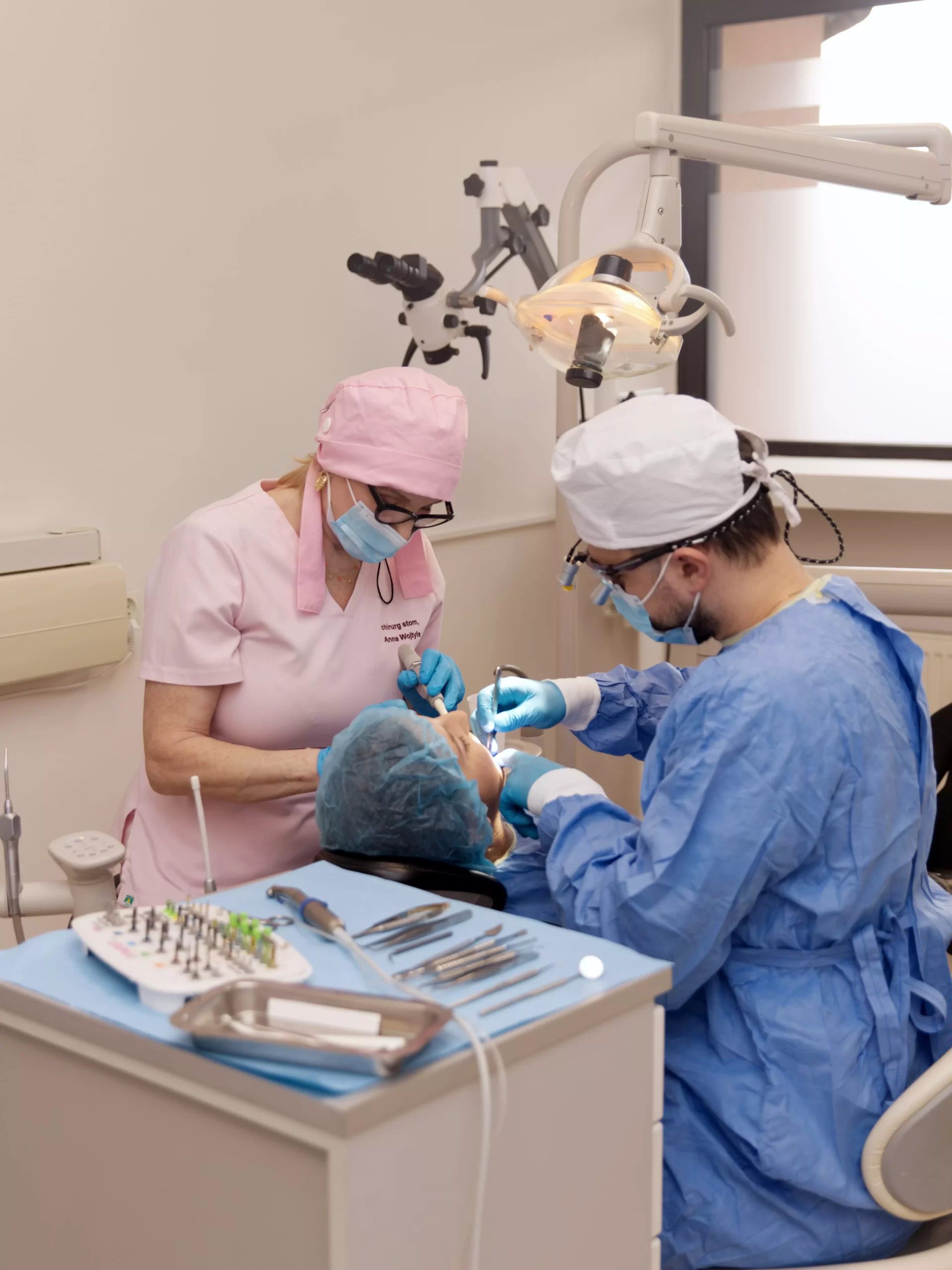
Implant (implant) is the best solution for missing tooth. Implant placement is a procedure that involves implanting/inserting a screw-like element into the patient's bone. These procedures are performed in full sterility and are performed by our specialists. An important fact is the bone conditions. Not every patient immediately qualifies for a simple implantation. Sometimes the procedure must be preceded by additional restoration of bone or gum structures. Therefore, a prior consultation with a CT scan is essential.

Treatments associated with simple implantation are:

  • Immediate implantation- implant is inserted immediately after tooth extraction along with regenerative treatment (bone substitute)
  • autogenous bone grafts- bone fragments are taken from the patient himself
  • sinus lift)- when there is no room for height in the jaw, increase the vertical dimension of the bone by raising the sinus and additional regeneration
  • mandibular alveolar nerve transposition
  • gingival restoration-the procedure aims to sew a gingival graft taken from the palate in place of a future implant

Issues in dental implantology

In the area of dental implantology, we offer a wide range of services-from simple implant placement to regenerative procedures to advanced implant-supported fixed prosthetics.

Implant or bridge?

A far better solution for missing one tooth is an implant.

With a bridge, the teeth adjacent to the gap have to be ground down, thus losing healthy tooth tissue, while with atraumatic implantation, the adjacent teeth remain unaffected.

There are, of course, cases when a patient should not opt for implantation. These include:

  • unregulated diabetes
  • cancer
  • osteoporosis
  • autoimmune disease
  • pregnancy
  • advanced nicotinism
  • organ transplant patient
  • advanced tissue destruction involving missing teeth significantly increasing costs

In such cases, the only solution left for the patient is the use of prosthetic bridges, which, of course, are also a good solution.

How long does implant treatment take?

Implant treatment generally takes several months. The procedure itself, if not preceded by additional procedures, is performed in a single visit. The length of treatment generates the denting time:

  • in the jaw it is 6 months
  • in the mandible are 3 months

After this time, a prosthetic crown is screwed to the implant. The price of the crown is not immediately determined. Its price is affected by the angle of implant insertion and the material. Temporary crowns are used in the aesthetic section after implant placement.

Post-operative monitoring

We provide ongoing monitoring after implant placement to control the healing process. We also schedule regular post-implant visits for prosthetic work and hygiene monitoring around the implant.

Implantoprosthetics

A branch of dental prosthodontics that includes implant-supported restorations.

Single implants are generally finished with screwed porcelain and metal works. This is a safe solution, thanks to which we have all the time control over the implant and can at any time unscrew the crown to correct the region.

The second solution is a prosthetic bridge on four or more implants. Here, too, we use screwed work.

The last alternative is implant-supported dentures (overdentures). Then, at a minimum, we need four implants in the jaw and two in the mandible. These are solutions used for complete edentulousness.

Issues in dental implantology

In the area of dental implantology, we offer a wide range of services-from simple implant placement to regenerative procedures to advanced implant-supported fixed prosthetics.

How long does implant treatment take?

Implant treatment generally takes several months. The procedure itself, if not preceded by additional procedures, is performed in a single visit. The length of treatment generates the denting time:

  • in the jaw it is 6 months
  • in the mandible are 3 months

After this time, a prosthetic crown is screwed to the implant. The price of the crown is not immediately determined. Its price is affected by the angle of implant insertion and the material. Temporary crowns are used in the aesthetic section after implant placement.

Implant or bridge?

A far better solution for missing one tooth is an implant.

With a bridge, the teeth adjacent to the gap have to be ground down, thus losing healthy tooth tissue, while with atraumatic implantation, the adjacent teeth remain unaffected.

There are, of course, cases when a patient should not opt for implantation. These include:

  • unregulated diabetes
  • cancer
  • osteoporosis
  • autoimmune disease
  • pregnancy
  • advanced nicotinism
  • organ transplant patient
  • advanced tissue destruction involving missing teeth significantly increasing costs

In such cases, the only solution left for the patient is the use of prosthetic bridges, which, of course, are also a good solution.

Implantoprosthetics

A branch of dental prosthodontics that includes implant-supported restorations.

Single implants are generally finished with screwed porcelain and metal works. This is a safe solution, thanks to which we have all the time control over the implant and can at any time unscrew the crown to correct the region.

The second solution is a prosthetic bridge on four or more implants. Here, too, we use screwed work.

The last alternative is implant-supported dentures (overdentures). Then, at a minimum, we need four implants in the jaw and two in the mandible. These are solutions used for complete edentulousness.

Post-operative monitoring

We provide ongoing monitoring after implant placement to control the healing process. We also schedule regular post-implant visits for prosthetic work and hygiene monitoring around the implant.

en_USEnglish